
PYP Level 1 + Make It Complete
Organizing and summarizing information — polished academic speech, without difficulty
Overview
PYP Level 1 is designed with reference to theme-based learning in international schools and builds the competence to structure nonfiction. It pairs with FluenTree in Tier 2: where FluenTree learns the development of a story in fiction and recites the text, PYP Level 1 structures the content of nonfiction and summarizes the book. At the end of each course, the child structures the whole book on a blank page and presents it in speech.
Visualizing & Structuring — Systematic Information Reception and Retrieval
- Every topic starts with ‘20 questions’ — written by the R&D team not only to capture the book’s core content but to lead the child to structure it. She reads the twenty questions she must be able to answer when the book and workbook are finished, then answers them one by one at the end to check herself. One book, summarized into twenty questions and answers.
- Story Structure Map — Title · Big Questions · Heading · Key Words: simplify and clarify, group related concepts, strengthen visual memory. In Review Month the child fills a blanked structure map: challenge → practice → internalize → check → assess. The PYP organizing themes: Who We Are · Where We Are in Place and Time · How We Express Ourselves · How the World Works · How We Organize Ourselves · Sharing the Planet.
- Make It Complete (M.I.C. Note) is the perfecting workbook linked to PYP Level 1 and Vocapedia 1000: what was learned is mastered through writing.
One book summarized into 20 questions and answers and rebuilt as a structure map.
Skills & goals
Cognitive abilities trained
Organizing · Structuring
Arrange and categorize information by relationships, hierarchy and themes; build a mental or visual framework
Remembering
Store and retrieve structured information
Memory Recall
Transform recalled information into coherent spoken language
Learning goals
Nonfiction structuring (System 2) · writing 20 questions · public speaking
Structure the whole book on a blank page and present it
Finally — Summarize & Speak: explain one topic in 20 sentences
Lessons
20 days — Learning Flow
Days 1–12 — Chapters 1·2·3: Pre-Reading → Vocabulary → Reading → 20 Questions → Speaking Set
Days 13–16 — read the whole book repeatedly and memorize it structurally · answer all 20 questions proficiently · summarize aloud with Speech Cards 1·2·3 · recite the whole book by analyzing and segmenting the Story Structure Map
Days 17–19 — write the ‘My Speech’ script from the memorized text and rehearse
Day 20 — Speech Day; vocabulary, multiple-choice, true/false, short-answer and speaking assessment
Materials
Vol.1–4 (8 topics a year: 16-page reading book · 20 Questions · Speaking Sets · Speech Cards) + Make It Complete Vol.1–4
192 online teaching materials · 152 online components · 320 e-books
OKR posters — 16 Learning Flow · 16 20 Questions · 16 20 Answers · 32 Structure Map
Monthly Progress Report
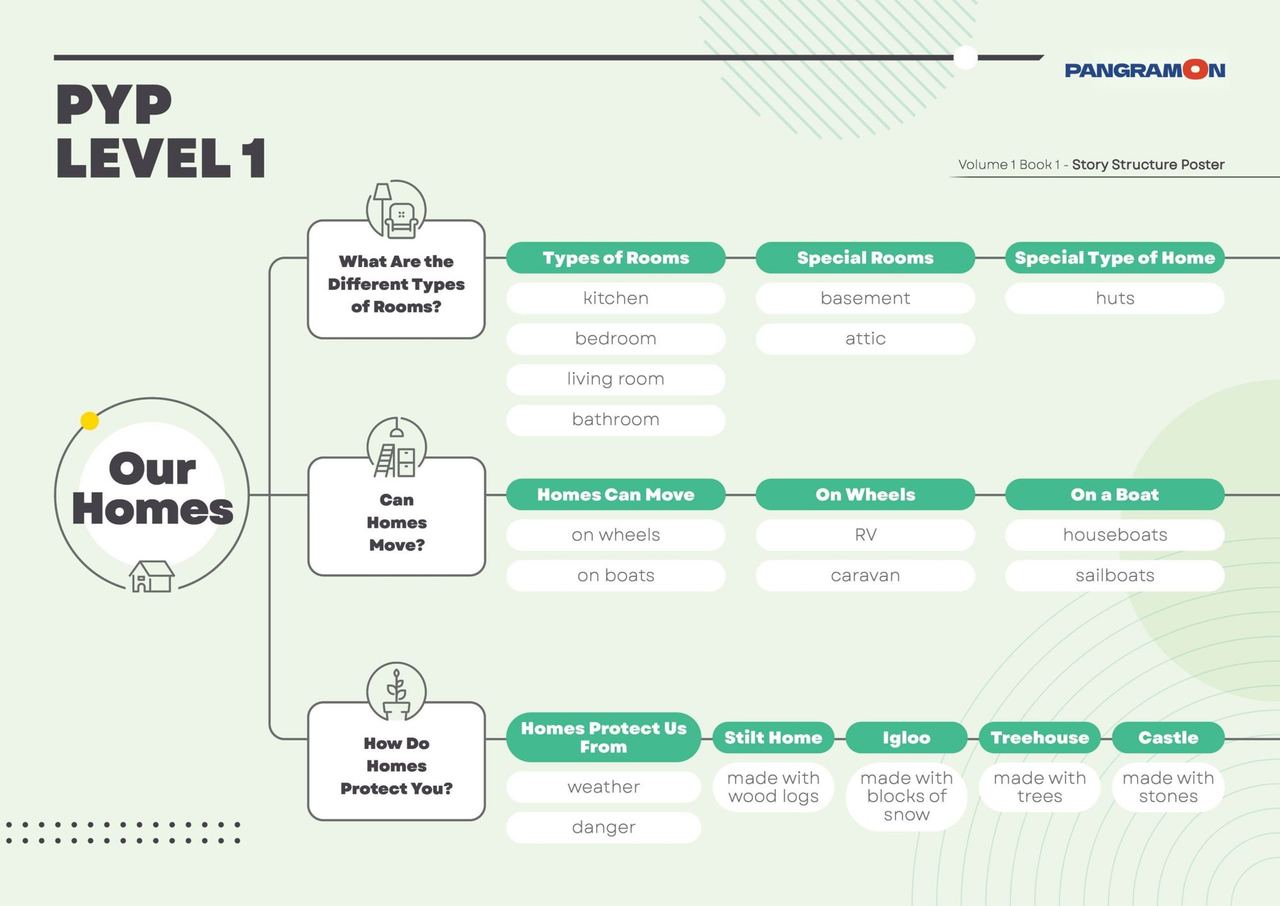
What Are the Different Types of Rooms? · Can Homes Move? · How Do Homes Protect You? — the structure map on the home page is this poster.
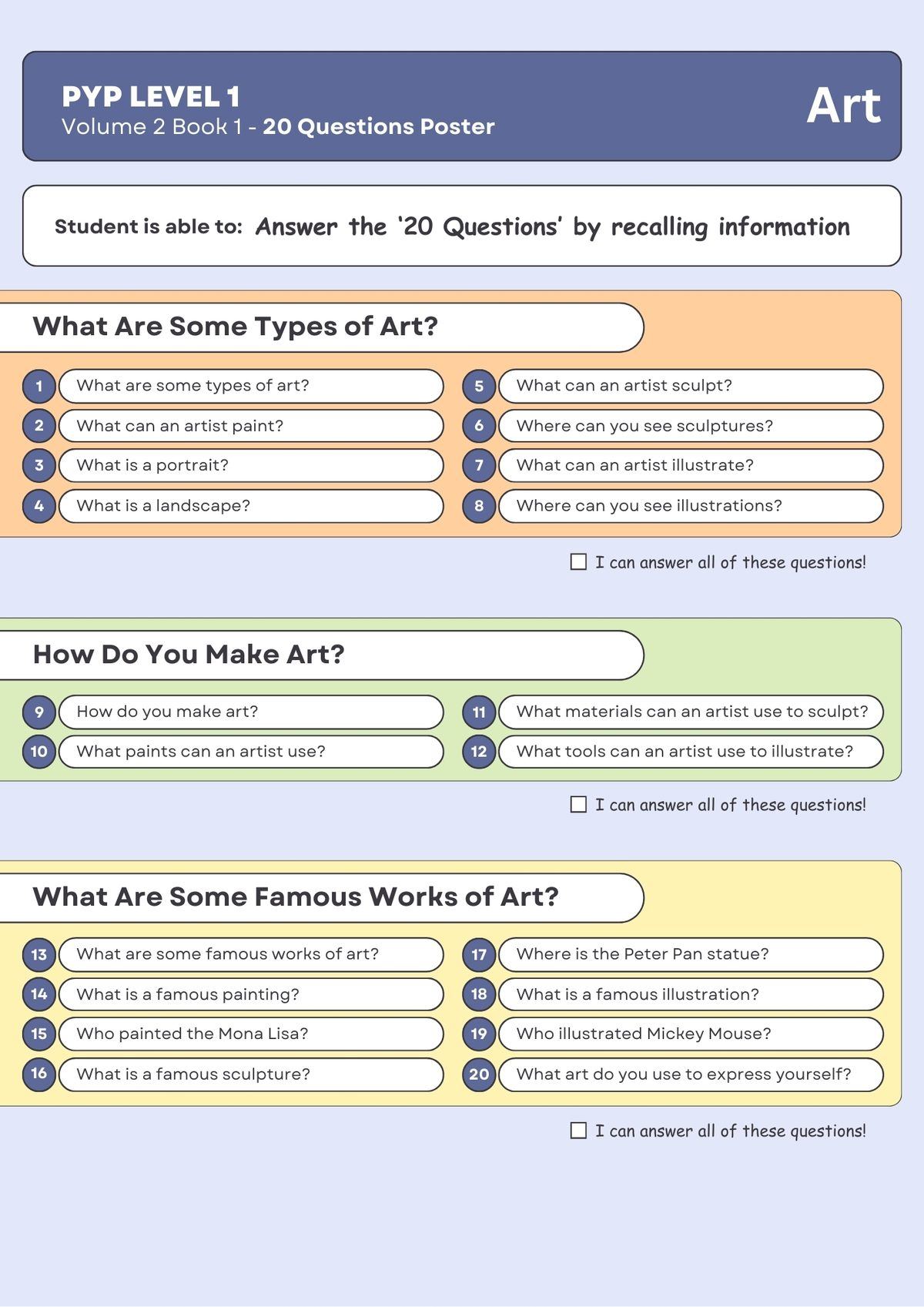
What Are Some Types of Art? · How Do You Make Art? · What Are Some Famous Works of Art? — each sub-topic ends with “I can answer all of these questions!”
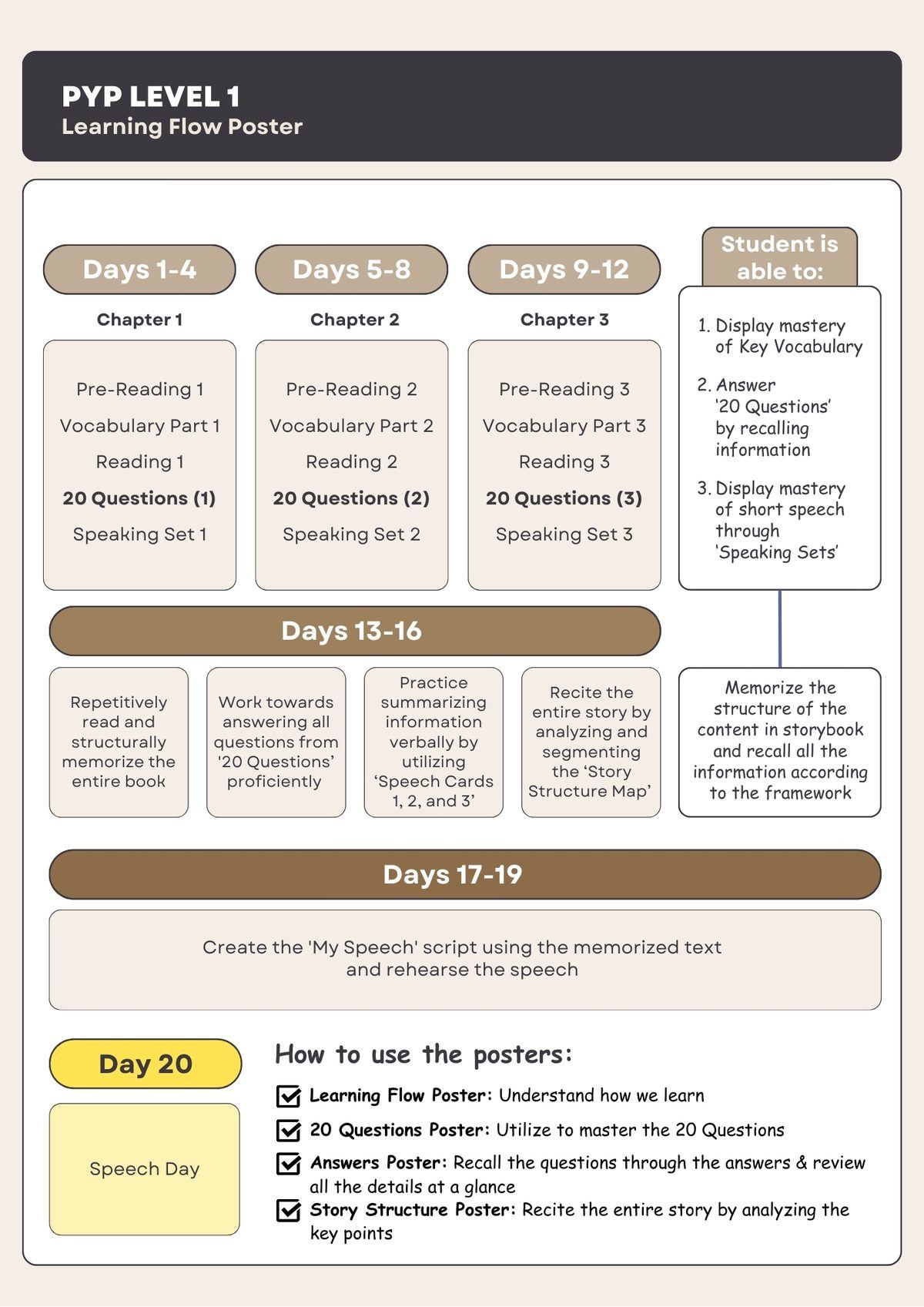
How to use the posters: Learning Flow (understand how we learn) · 20 Questions (master the questions) · Answers (recall the questions through the answers, review every detail at a glance) · Story Structure (recite the whole by analyzing the key points).
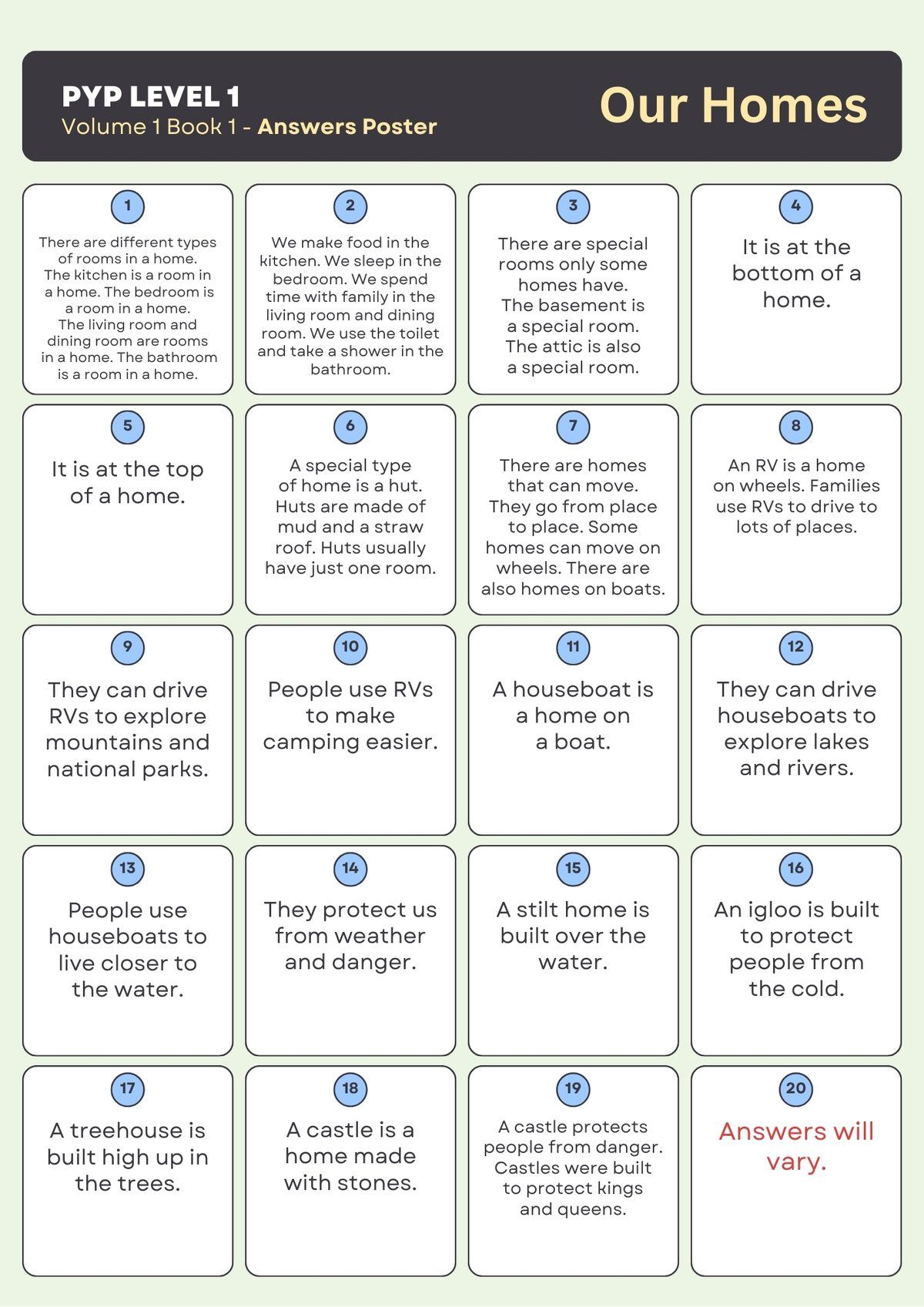
“16. An igloo is built to protect people from the cold.” “20. Answers will vary.” The answers bring back the questions.
Every learning journey starts with a conversation
Contact us to learn about the curriculum and a campus near you.